
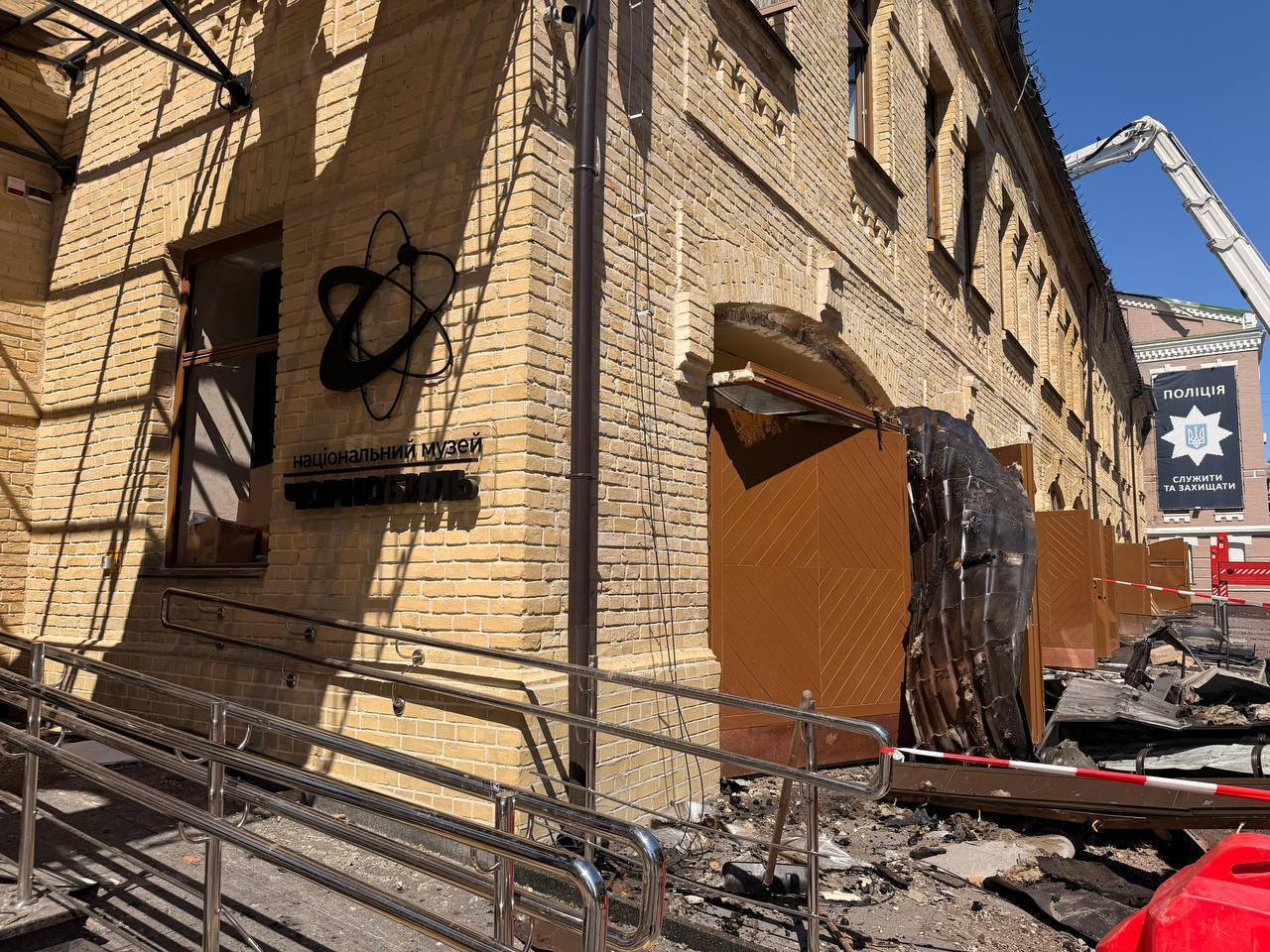
It is with profound sadness that we report the loss of one of Kyiv’s most poignant and historically significant landmarks. Overnight, a massive Russian missile strike destroyed the National Chornobyl Museum, along with a neighboring unit of the State Emergency Service (DSNS) in the Kyiv region.
For decades, this museum has been a vital stop for our visitors, historians, and anyone wanting to understand the deep scars and incredible heroism surrounding the 1986 nuclear disaster. Today, we mourn the loss of the physical space, but we vow to keep its stories alive.

A Beloved Landmark Reduced to Rubble
First opened in 1992 and granted National status four years later, the National Chornobyl Museum was an invaluable repository of unique testimonies, documents, and living memories of the tragedy.
The museum was fittingly housed in a specially reconstructed historic Fire Watchtower (Kalancha)—an early 20th-century architectural monument in Podil. It was from this very location and its neighboring buildings that the Kyiv Regional Directorate of Fire Protection operated in the 1980s. These were the brave first responders who took the first, heaviest blow in extinguishing the Chornobyl fire 40 years ago.
The cruelty of this destruction is compounded by recent events: in honor of the 40th anniversary of the Chornobyl disaster, the museum’s exhibitions had just been significantly updated and modernized. After lengthy repairs, it reopened its doors to visitors on April 26, 2026. This beautiful new exposition existed for less than a month.
The Heroism of First Responders Continues
The overnight attack didn’t just target history; it targeted the very people protecting our present. Andriy Danyk, Head of the State Emergency Service of Ukraine, reported that a shift of 30 rescuers was on duty when the missile struck. Thankfully, all personnel managed to reach the shelter in time.
In a breathtaking display of dedication, immediately after the blast, half of the rescue squad emerged to extinguish the fire consuming their own building, while the other half continued to field emergency calls and coordinate rescue efforts across the region. Though 10 fire engines were completely destroyed, the management resumed operations from a secure location within hours—proving that while equipment can be burned, the Ukrainian spirit cannot be broken.
Tragically, the broader attack on Kyiv took a heavy toll. The number of victims from the overnight strikes has risen to 78, with two people confirmed dead. Emergency services continue to work tirelessly at all impact sites, and DSNS psychologists have already provided critical assistance to 247 citizens.

Erasing History, But Not the Truth
For years, the museum served not only as a cultural and educational destination but as a sacred meeting place for liquidators, former residents of the evacuated city of Pripyat, and anyone deeply moved by the Chornobyl tragedy.
What sick imagination could see a “decision-making center” or a “legitimate military target” in a museum? This cannot be explained by any military logic. Instead, it stands as a blatant attempt to erase the memory of the tragedies and crimes of the Soviet system. Destruction, rewriting, and falsification of history are the weapons of the aggressor.
You can destroy walls and exhibitions. You can burn historical documents and artifacts. But the truth cannot be destroyed.
To our TourKyiv community, our guides, and the global travelers who have walked the solemn halls of the National Chornobyl Museum: we have lost a profound piece of our city’s heritage today. However, we will not allow the aggressor to dictate our past. We will preserve these memories for future generations.

Photo Credits: State Emergency Service of Ukraine (DSNS) / Ministry of Internal Affairs of Ukraine
Discover more from Tour Kyiv
Subscribe to get the latest posts sent to your email.

No responses yet