
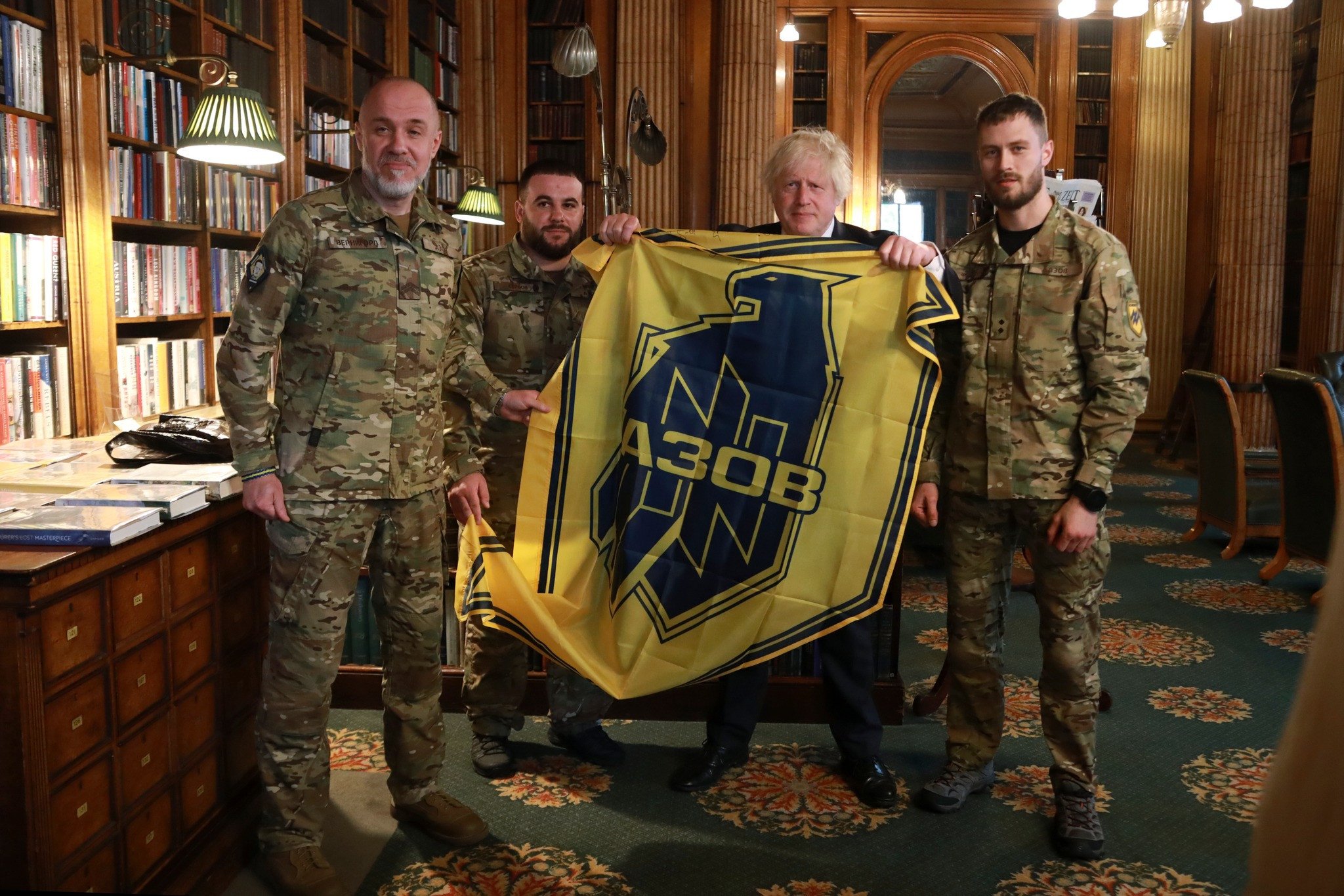
When people consider visiting Ukraine — especially Kyiv — they often arrive with questions shaped by headlines, social media, and conflicting narratives. One of the most common and misunderstood topics is the Azov Regiment, a military unit frequently labeled online as “Nazi.”
Understanding what Azov is — and what it is not — is part of understanding modern Ukraine itself. And for travelers interested in history, politics, and real-world context, this story is best explored on the ground, with knowledgeable local guides who can separate fact from myth.
Where the Azov Controversy Comes From
Azov was formed in 2014, during the early stages of Russia’s war against Ukraine, when the country urgently needed volunteers to defend its territory. Like many volunteer battalions formed in moments of crisis — in Ukraine and elsewhere — Azov’s early composition included individuals from a wide range of backgrounds.
Some founding members had far-right or ultranationalist views, and early imagery associated with the unit included symbols that were widely criticized. These facts are documented and acknowledged by historians and journalists.
But early origins do not automatically define what an organization becomes — especially after years of reform.
What Azov Is Today
Later in 2014, Azov was officially incorporated into Ukraine’s National Guard, placing it under:
- State command
- Military law
- Formal oversight and regulation
Since then:
- Political ideology is not part of the unit’s doctrine
- Members come from diverse ethnic, linguistic, and religious backgrounds
- Ukraine’s government has restricted extremist political movements, including on the far right
In short, Azov today functions as a state-controlled military unit, not an ideological movement.
Comparing Azov to Similar Cases Abroad
Azov is often discussed as if it were unique — but similar situations have occurred in many countries.
- United States: Soldiers with extremist views have been identified and removed from the armed forces, without defining the military as extremist
- United Kingdom: Personnel linked to far-right groups have been dismissed under military law
- France & Germany: Armed forces have faced scandals involving ultranationalist elements, followed by reforms and investigations
In democratic systems, the presence of extremists among individuals is treated as a disciplinary issue, not proof of state ideology. Ukraine’s case fits this broader international pattern.
Why This Matters for Visitors to Kyiv
For travelers, this discussion isn’t about military units alone — it’s about how Ukraine is often misunderstood.
Kyiv is not defined by extremist ideology. It is:
- A city over 1,500 years old
- A center of medieval European civilization
- A hub of culture, art, religion, and education
- A place shaped by empires, revolutions, and resilience
Understanding modern Ukraine requires context, not slogans. And that context becomes far clearer when you:
- Walk through historic districts like Podil
- Visit Independence Square and learn about recent revolutions
- Explore museums, monasteries, and memorials with expert explanation
Seeing Ukraine Beyond the Headlines
Many visitors tell us the same thing after arriving in Kyiv:
“This is nothing like what I expected.”
That’s because Ukraine is often discussed about, but rarely experienced directly.
Guided tours with local experts allow you to:
- Ask difficult questions openly
- Understand complex modern history without propaganda
- Learn how Ukrainians themselves view their past and present
- Separate online narratives from lived reality
At TourKyiv.com, our historical and cultural tours are designed not just to show landmarks, but to explain Ukraine — honestly, thoughtfully, and in depth.
Travel That Adds Understanding
Travel is most meaningful when it adds clarity rather than confusion. Ukraine’s story — including controversial topics like Azov — deserves nuance, history, and human perspective.
If you’re curious about Kyiv, Ukraine’s past, and its present-day reality, there’s no substitute for seeing it yourself.
👉 Explore Kyiv with knowledgeable local guides and experience Ukraine beyond the headlines at TourKyiv.com


No responses yet